Here is an uncomfortable fact about one of the most-hyped longevity compounds.
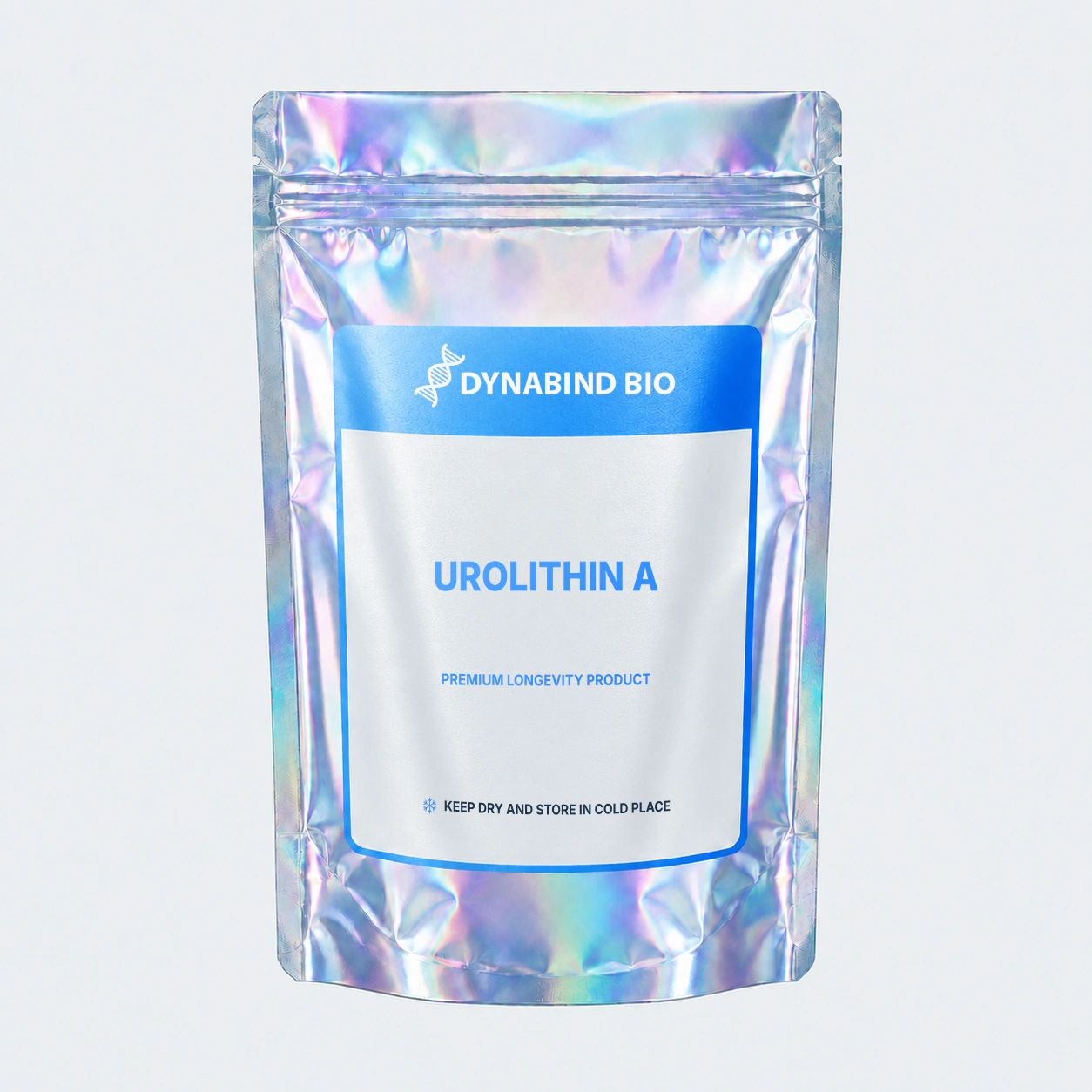
Pomegranates and walnuts do not contain Urolithin A. They contain ellagitannins — precursor molecules that specific gut bacteria convert into Urolithin A during digestion. If you don't carry those bacteria, the conversion doesn't happen, and the pomegranate does approximately nothing for your mitochondria.
Human studies describe distinct urolithin metabotypes, and conversion capacity varies with gut microbial composition, age, and health status. The literature does not support one universal producer percentage for every population.
Pomegranate still supplies polyphenols, but it should not be assumed to deliver a predictable Urolithin A dose. Direct supplementation removes that conversion uncertainty.
What Mitophagy Does and Why It Fails With Age
Mitophagy is the selective removal of damaged mitochondria. It exists because a broken mitochondrion is worse than no mitochondrion — it produces minimal ATP while leaking reactive oxygen species into the cell.
The recognition system works through membrane potential. Healthy mitochondria maintain a charge across the inner membrane; damaged ones lose it. PINK1 accumulates on depolarised mitochondria, recruits Parkin, and the organelle is ubiquitin-tagged for autophagic capture.
With age this system becomes less efficient. Damaged mitochondria persist rather than being cleared, and the population of functioning mitochondria in a cell gradually degrades in both number and quality. In skeletal muscle this contributes to the loss of strength and endurance that characterises sarcopenia.
The Human Evidence
Urolithin A has several controlled human studies. They support safety, biomarker changes, and selected muscle outcomes, but not every prespecified functional endpoint improved.
Andreux et al., 2019 — Nature Metabolism
The first-in-human study. A randomised, double-blind, placebo-controlled trial in healthy sedentary older adults established safety across dose levels, and — critically — took skeletal muscle biopsies. Analysis showed changes in mitochondrial gene expression consistent with mitophagy induction, alongside shifts in plasma acylcarnitine profiles indicating altered mitochondrial fatty acid handling. Human trial
The muscle-biopsy and plasma findings provide a human molecular signature consistent with improved mitochondrial health. They do not directly measure mitophagic flux, so "confirmed mitophagy in humans" would be stronger than the data support.
Two 2022 functional trials — read the endpoints
A JAMA Network Open trial in older adults reported improvements in selected muscle-endurance measures, while its co-primary six-minute walk and maximal ATP-production outcomes were not significantly different from placebo. Human trial, mixed outcomes
A separate four-month trial in middle-aged adults reported about a 12% improvement in leg strength and favorable secondary endurance measures, but its primary peak-power endpoint was not significantly improved. Human trial, mixed outcomes
The practical reading is narrower than the marketing: selected muscle and biomarker outcomes improved, while important primary outcomes did not. Replication independent of the product sponsor would strengthen confidence.
Where It Fits
| Goal | Rationale | Assessment window |
|---|---|---|
| Muscle endurance | Direct RCT evidence | 3–4 months |
| Mitochondrial quality | Mitophagy signature in human muscle | Not self-assessable |
| Exercise recovery | Mechanistically plausible; less directly tested | 8–12 weeks |
| General healthy ageing | Mitochondrial dysfunction is a recognised hallmark of ageing | Long-term |
Urolithin A works alongside NAD⁺ precursors rather than duplicating them. NAD⁺ precursors improve the capacity of mitochondria you have; Urolithin A supports removal of the ones beyond repair. Different halves of the same quality-control cycle — which is the argument for the Longevity Complex™ approach over single-compound buying.
Why purity is not a minor detail here
Urolithin A is expensive to manufacture. That creates obvious incentives for adulteration, and the market has seen products sold as Urolithin A that were substantially pomegranate extract — ellagitannins that, for the majority of buyers, will not convert.
Buy on a certificate of analysis for the actual batch, or don't buy. DynaBind publishes third-party testing on the quality page.
Timeline
The trial that showed functional improvement ran four months. Nothing on this page justifies expecting a change in two weeks. Mitochondrial turnover is slow, and a compound working on organelle recycling operates on the timescale of that recycling, not the timescale of your patience.
See Urolithin A →References
Andreux PA, et al. The mitophagy activator urolithin A is safe and induces a molecular signature of improved mitochondrial and cellular health in humans. Nat Metab. 2019;1:595–603. Human trial
Singh A, et al. Effect of Urolithin A supplementation on muscle endurance and mitochondrial health in older adults. JAMA Netw Open. 2022;5(1):e2144279. Human trial, mixed outcomes
Singh A, et al. Urolithin A improves muscle strength, exercise performance, and biomarkers of mitochondrial health in middle-aged adults. Cell Rep Med. 2022;3(5):100633. Human trial, mixed outcomes
Tomás-Barberán FA, et al. Urolithins, the rescue of "old" metabolites to understand a "new" concept: metabotypes as a nexus among phenolic metabolism, microbiota dysbiosis and host health status. Mol Nutr Food Res. 2017;61(1). Human observational
These statements have not been evaluated by the Food and Drug Administration. Not intended to diagnose, treat, cure or prevent any disease. Consult a qualified healthcare professional before use.