Most people buying "mitochondrial supplements" buy four products that all do the same job, and leave three other jobs uncovered.
It's an understandable mistake. The marketing collapses everything into "cellular energy," so a shelf of CoQ10, PQQ, NMN and creatine looks like coverage. It isn't. Mitochondrial health has distinct sub-problems, and a compound that solves one won't touch another.
Here's the framework, and where each compound in this catalogue actually sits.
What Goes Wrong With Mitochondria
Mitochondrial dysfunction is one of the recognised hallmarks of ageing. Mitochondria can be affected in four ways:
- Fuel shortage — NAD⁺ declines with age, and without it the dehydrogenase reactions feeding the electron transport chain cannot run.
- Transport inefficiency — electrons must be shuttled between respiratory complexes. Falling CoQ10 slows that relay.
- Falling numbers — mitochondrial biogenesis slows, so cells hold fewer functioning mitochondria.
- Accumulating damage — mitophagy declines, so broken mitochondria linger, producing oxidative stress instead of ATP.
Fix only the fuel supply and you're pouring fuel into a shrinking, partly broken fleet. That is the actual reason people take an NAD⁺ precursor for three months and feel very little.
Job One: Fuel — NAD⁺ Availability
NAD⁺ is the electron carrier that makes oxidative phosphorylation possible. Tissue levels fall substantially with age across species.
NMN has the strongest human evidence — Yoshino and colleagues (2021) demonstrated improved muscle insulin sensitivity in a randomised placebo-controlled trial. Human trial
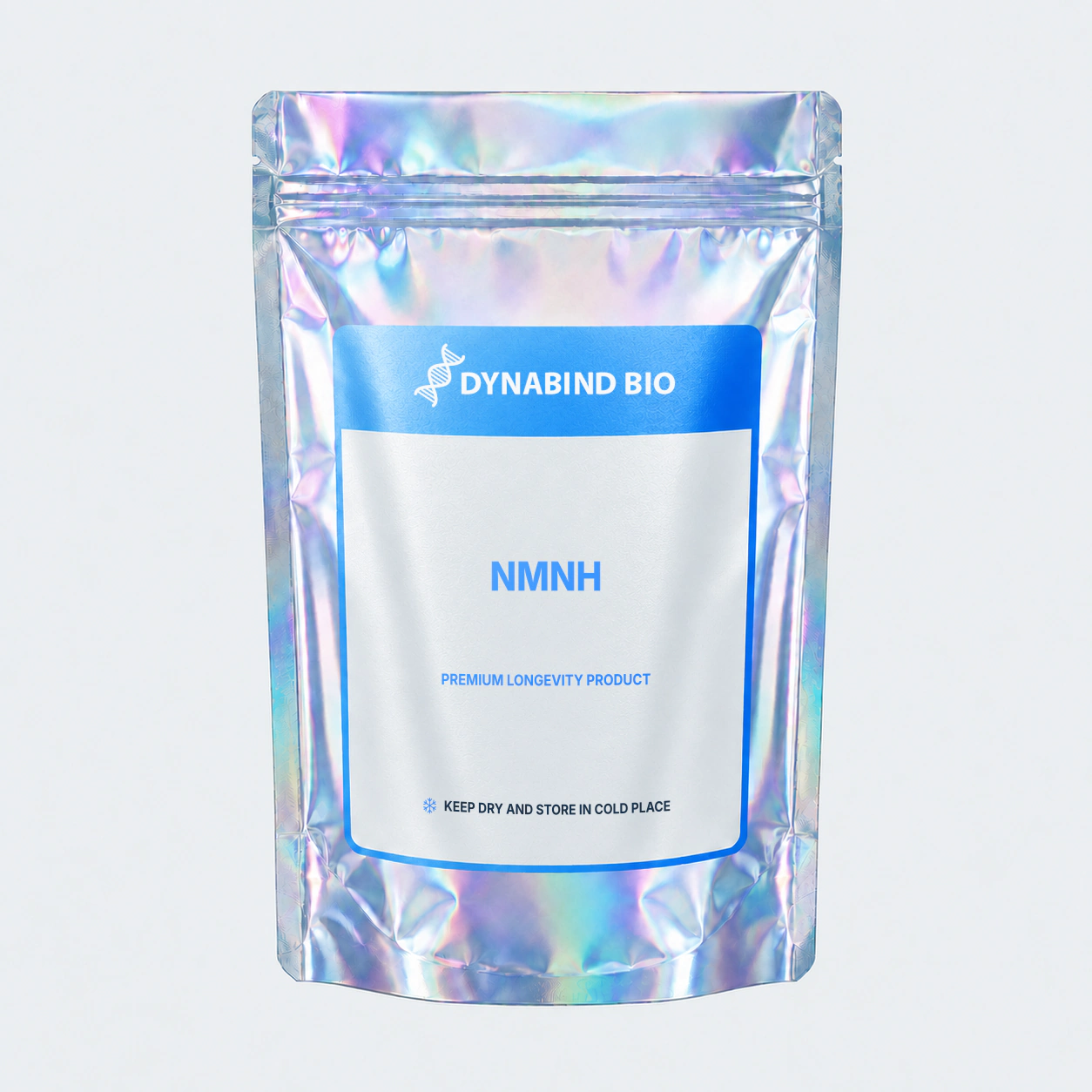
NMNH is the reduced form, showing higher and faster NAD⁺ elevation in cells and rodents, without published human trials yet. Preclinical
Nicotinamide Riboside is the most extensively human-trialled precursor of all, with multiple published safety and pharmacokinetic studies. Human trial
NADH is the reduced coenzyme itself — no conversion needed, donating electrons directly. Human trial, small
Job Two: Transport — Electron Relay
Coenzyme Q10 carries electrons between Complex I/II and Complex III. Endogenous synthesis declines with age, and statins suppress it further via the shared mevalonate pathway.
CO-Q10 (Ubiquinol) is the pre-reduced form, better absorbed than standard ubiquinone. The Q-SYMBIO trial (Mortensen et al., 2014) found CoQ10 supplementation reduced major adverse cardiovascular events in chronic heart failure — a genuine, large, randomised outcome trial. Human trial
5-ALA works a step upstream: it's the rate-limiting precursor for heme synthesis, and heme groups are structural components of the cytochromes in the electron transport chain. Without adequate heme, the transport hardware itself is incomplete. Mechanism
Job Three: Numbers — Biogenesis
Mitochondrial biogenesis is governed by PGC-1α. PQQ has been shown in cell models to increase PGC-1α expression via CREB phosphorylation, driving new mitochondrial formation. Mechanism
Worth stating plainly: exercise is a more powerful PGC-1α activator than any supplement. Endurance training is the reference intervention here, and PQQ is a support layer, not a substitute.
Job Four: Cleanup — Mitophagy
Urolithin A is the compound with direct human mitophagy evidence — Andreux and colleagues (2019) confirmed a mitophagy gene signature in human muscle biopsies, and Singh and colleagues (2022) reported improved muscle endurance over four months. Human trial
Spermidine 3HCl induces general autophagy, of which mitophagy is a subset. Preclinical See autophagy vs mitophagy for why these aren't interchangeable.
Protecting What You Build
Mitochondria generate reactive oxygen species as a by-product, and mitochondrial DNA sits close to the source with limited repair machinery. Antioxidant support belongs in the framework, not as a fifth job but as maintenance across all four.
L-Ergothioneine is actively transported into cells under high oxidative load via OCTN1 — the body built dedicated machinery to concentrate it. Mechanism Sulforaphane activates Nrf2, increasing the cell's own antioxidant enzyme output rather than supplying antioxidant molecules directly. Mechanism
Mitochondria and the Aging Retina
The neural retina and retinal pigment epithelium have high energy requirements and are vulnerable to age-related mitochondrial and oxidative stress. This makes mitochondrial quality a legitimate vision-research topic, but it does not establish that a general mitochondrial supplement improves eyesight or treats retinal disease. The Vision section should be read as pathway-oriented product information, not a clinical eye-care recommendation. Mechanism and review evidence
Putting It Together
| Job | Compounds | Evidence strength |
|---|---|---|
| Fuel (NAD⁺) | NMN, NMNH, NR, NADH | Strong for NMN/NR; preclinical for NMNH |
| Transport | Ubiquinol, 5-ALA | Strong for CoQ10; mechanistic for 5-ALA |
| Biogenesis | PQQ | Mechanistic, small human |
| Cleanup | Urolithin A, Spermidine | Strong for Urolithin A |
| Protection | L-Ergothioneine, Sulforaphane | Mechanistic |
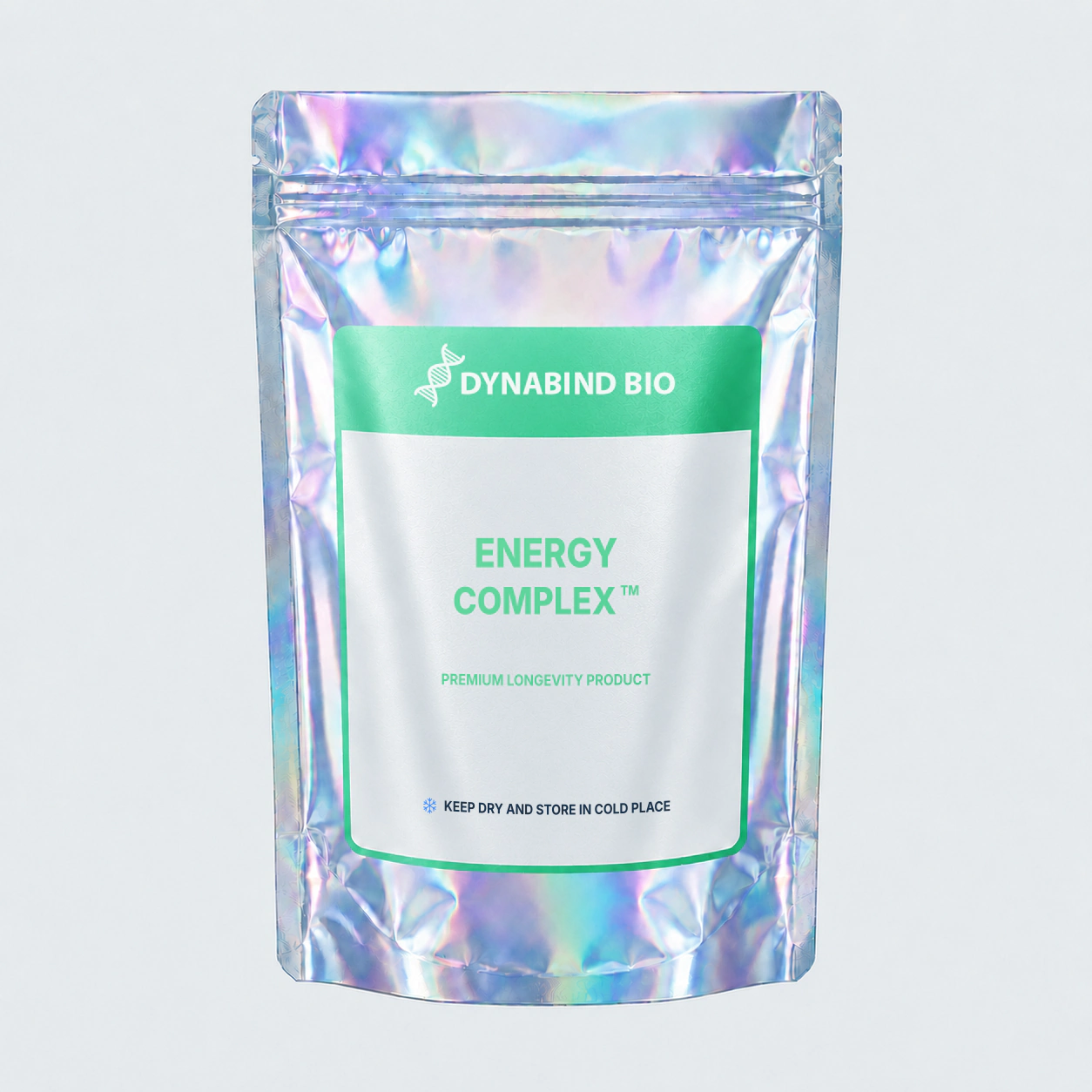
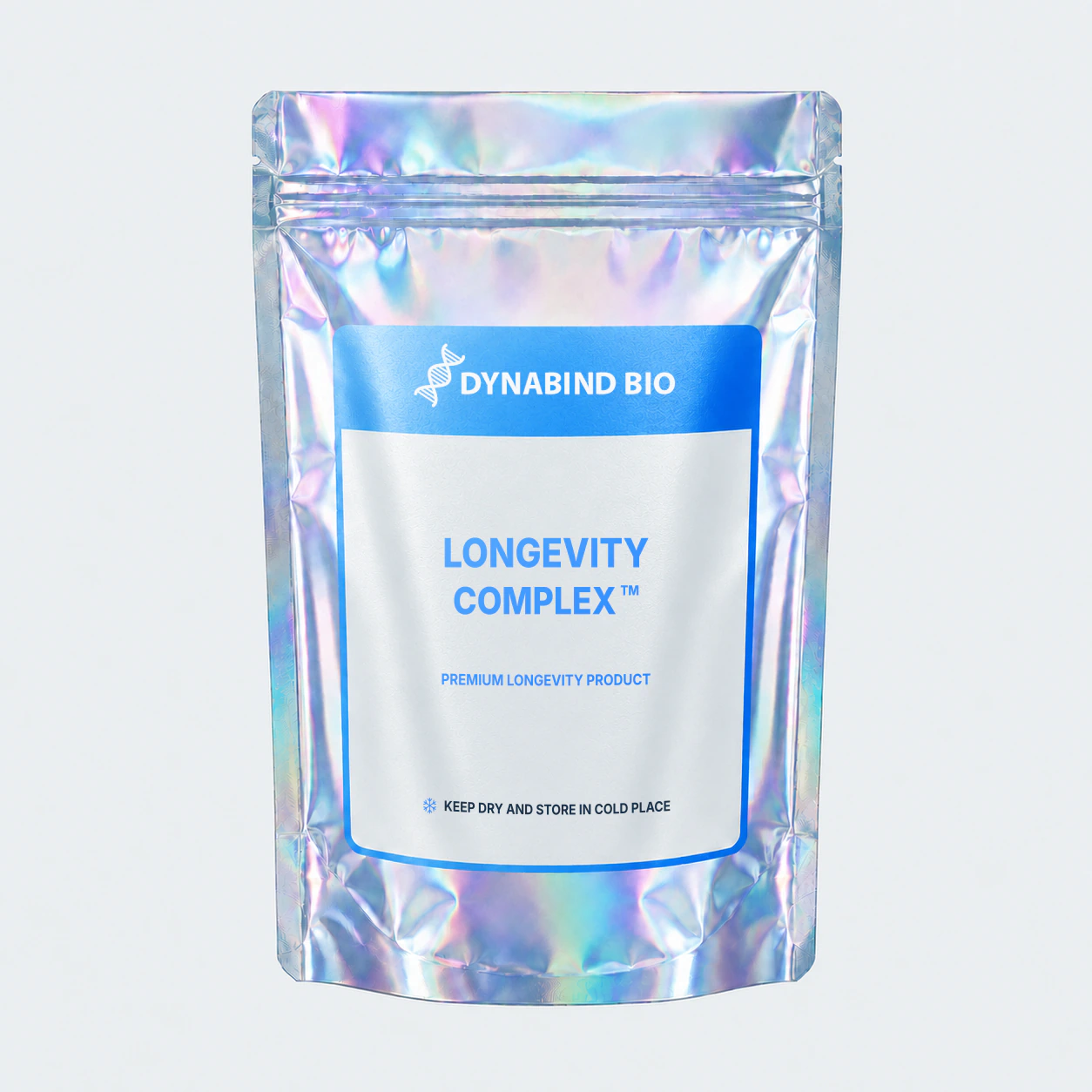
Assembling this individually means multiple orders and daily weighing. The Energy Complex™ covers the fuel and transport arms for anyone whose priority is fatigue; the Longevity Complex™ spans all four jobs plus the DNA-maintenance compounds.
See the Longevity Complex™ →Timeline, honestly
Blood NAD⁺ rises within days. Everything downstream is slower: the biogenesis and mitophagy trials that showed functional change ran three to four months. Assess at twelve weeks. Anything promising results in a fortnight is describing a stimulant, not mitochondrial remodelling.
References
Yoshino M, et al. Science. 2021;372(6547):1224–1229. Human trial
Mortensen SA, et al. Q-SYMBIO. JACC Heart Fail. 2014;2(6):641–649. Human trial
Andreux PA, et al. Nat Metab. 2019;1:595–603. Human trial
Chowanadisai W, et al. J Biol Chem. 2010;285(1):142–152. Mechanism
López-Otín C, et al. The hallmarks of aging. Cell. 2013;153(6):1194–1217. Review
Eells JT. Mitochondrial Dysfunction in the Aging Retina. Biology (Basel). 2019;8(2):31. Review
These statements have not been evaluated by the Food and Drug Administration. Not intended to diagnose, treat, cure or prevent any disease. CoQ10 may interact with warfarin. Consult a qualified healthcare professional before use.